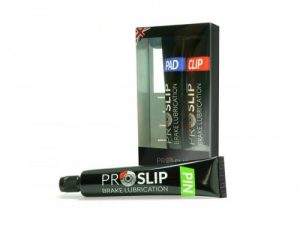
ProSlip Brake Grease Kit
The ProSlip Way – Minimise Caliper Friction to Maximise Braking Force
Lots of ‘Brake Grease’ products have entered the market since ProSlip was launched over 5 years ago and developed this market. How do you know which one to trust on a critical component of your vehicle? Without knowing something about lubrication this is impossible – not all greases are equal and it comes down to chemistry. Lubricants are formulated for specific conditions. Temperature conditions – heat or cold. How long they must last – service interval. Materials they are in contact with – plastic, rubber, metal. The forces they are subjected to – shear forces. Looking at a lump of grease you wouldn’t know what it was capable of dealing with – one lump of grease looks much like another except perhaps for the colour. Lubricants are made for extreme temperatures – for example to lubricate components in an industial oven. Or for extreme cold – such as in the artic or, in outer space. The lubricant engineers need to know the exact requirements of the application before they consider what will be the right formulation. The lubrication of brake caliper components has not been top of the ‘must do’ for lubrication engineers. Global players like Shell, Castrol and especially Dow prefer to deal with high volume industrial applications. Dow in particular has an unrivalled position as a developer of specialist lubricants. Some Dow lubricants are very expensive as they contain chemicals based on elements which are expensive to manufacture and produce – fluorinated compounds for instance.
A conventional brake caliper has three zones potentially needing a lubricant. The pad-caliper interface, the area where the pad sits in the steel brake shim and the sliding caliper pin. A lubricant engineer would ask if each zone is subject to the same conditions and whether one lubricant would do – that would save on time and money. Let’s consider the pressure involved at each zone. The force applied to the back of a brake pad is extreme. AI says ‘This force is substantial, often exceeding the maximum engine power to stop the vehicle’. So we can conclude unless a lubricant has an EP – extreme pressure – rating it will just be squeezed out !!. All EP grease therefore have a solid component which cannot be squeezed out from the EP zone. Typically this solid is either the graphite or the more expensive molybdenum disulphide. Both black or dark grey. So, any grease which claims to be a ‘brake pad grease’ and does not look black or dark greay is unlikely to be EP rated. Graphite and molybdenum are used because they do not break down under high temperature and because their molecules slide over each other act as a lubricant in the abscence of a grease carrier.
Now let’s consider the sliding caliper pin. This is the component responsible for ‘caliper seizure’ and the MOT failure ‘braking efficiency’ below requirements. OK. So what are the lubrication requirements of a sliding caliper pin? Extreme pressure? No – the pin has to allow the caliper to slide freely which is held by the caliper bracket attached to the wheel hub and there is no extreme pressure involved here. Instead the pin needs to slide freely and under a wide temperature range – calipers get very cold, especially in places like Canada, and very hot under repeated braking. A sliding pin lubricant must also protect the two metal surfaces it sits between and should not interact chemically with the butyl rubber dust boot. A lubrication engineer would remark that the caliper moves very little under operation – just enough to push the pad onto the disc. This is known as a micro movement in engineering – it is not noticeable to the human eye – and places specific demands on a lubricant. A sliding pin lubricant must allow the pin to undergo these micro movements unrestricted and at the same time protect the metal surfaces involved. Will any old lubricant do for this job then? In the past folks used copper grease because it was sold as an ‘anti-seize’ grease and caliper pins were known to seize. They seized in part because garages used copper grease and while bit of copper have a high melting point the grease carrier doesn’t and moreover copper grease is a poor lubricant as elemental copper molecules – much less bits of copper – do not slide over each other in the same way graphite or molybdenum disulphide molecules do. A caliper pin lubricant must protect metal under load, allow micro movements, not interact with rubber and have a wide temperature service range. ProSlip PIN is a synthetic polyalkylene glycol grease with lithium soap. It is made to fulfill these requirements. If the brake grease you are considering does not state on the tube what it is then that should leave you wondering why the manufacturer doesn’t have the confidence to state the formulaof their product? The fact is, many ‘brake greases’ are just cheap silicone grease. ‘Ceramic grease’? what is that? What is the formula? Little bits of porcelain? Ceramic is a marketing term used to convey the idea the product is special and so can be sold at a higher price. ProSlip PIN is expensive because it is expensive to make. Cheap tubes of purple grease you can smear all over your wheel hub and caliper? What is it made of?? Why the secrecy? Is it just cheap silicone?? Here’s a useful video on brakes..
‘Amazon Choice’ – See Our Positive Reviews!
‘Finally a company makes the right grease for the job and it is good as well!’
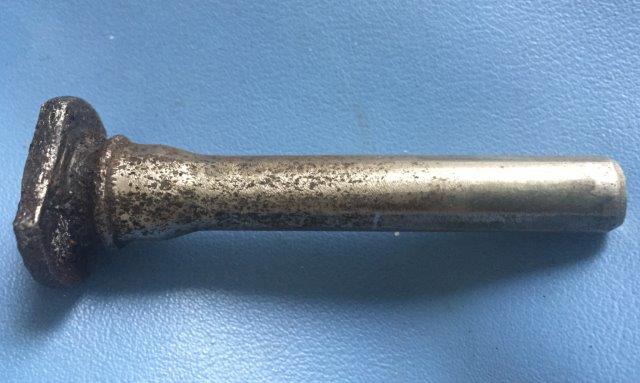 ProSlip PIN – synthetic polyalkylene glycol very low friction anti-fretting lubricant – the only product on the market made just for sliding caliper pins. Fretting is a wear pattern seen as pitting and occurs when two metal surfaces rub together repeatedly under load. NOTE!!! – BTAS – ceramic grease -Ceratec – Molyslip – will not protect against fretting corrosion and are NOT recommended by Mercedes or Toyota.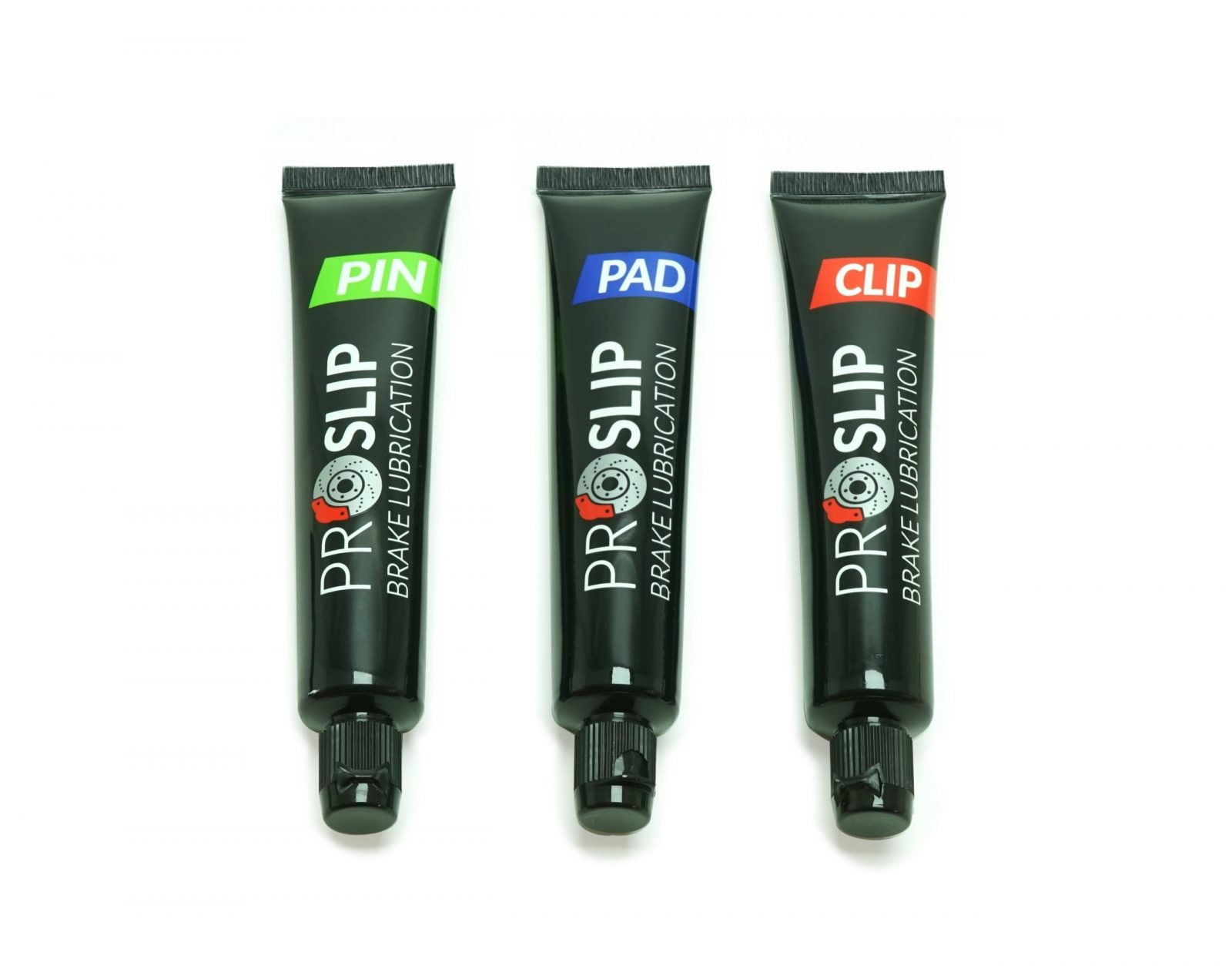
ProSlip PIN – Caliper Pin
- Synthetic polyalkylene glycol with lithium
- Made in Great Britain
- Anti-fretting low friction
- MOD approved
- OEM for Mercedes, Toyota, VW, Audi
- Service temperature range -40 to 200°C
- ABS, ESP compatible
- Rubber compatible
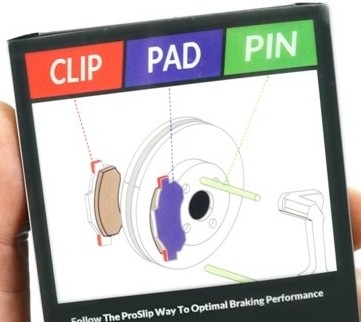
ProSlip PAD – Anti-Squeal
- Extreme Pressure – EP – rated lubricant
- Made in Great Britain
- Reduces noise vibration and harshness
- Dry component resists washout and oxidation
- Advanced anti corrosion package with lithium
- Service temperature range -40 to 250°C (-40 to 392°)
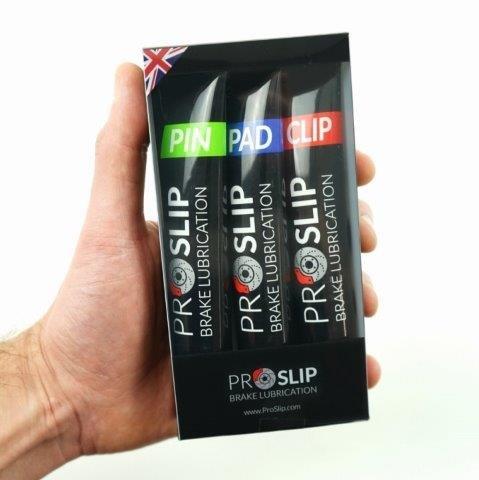
ProSlip CLIP – Anti-Corrosion
- Highly refined dry anti-seize lubricant
- Manufactured by Shell UK
- Powerful anti corrosion and oxidation package – resists washout
- Service temperature range -40 to 250°C (-40 to 392°F)
REFUND POLICY
If you are not 100% satisfied with your purchase, you can return the product and get a full refund or exchange the product for another one. Any product you return must be in the same condition you received it and in the original packaging. Send to ProSlip Ltd. 24 Marine Road Prestatyn LL19 7HD. admin@proslip.com
Eliminate Brake Drag | Improve Acceleration |Efficient Brakes| Improve Pedal Feel | Improve Safety Level
[/vc_column_text][/vc_column][/vc_row][vc_row bg_type=”bg_color” bg_override=”full” css=”.vc_custom_1512135705252{padding-top: 40px !important;padding-bottom: 40px !important;background-color: #f8f8f8 !important;}” bg_color_value=”#f8f8f8″][vc_column width=”1/2″][vc_column_text][/vc_column_text][/vc_column]
REFUND POLICY
If you are not 100% satisfied with your purchase, you can return the product and get a full refund or exchange the product for another one. Any product you return must be in the same condition you received it and in the original packaging. Send to ProSlip Ltd. 24 Marine Road Prestatyn LL19 7HD. admin@proslip.com
Eliminate Brake Drag | Improve Acceleration |Efficient Brakes| Improve Pedal Feel | Improve Safety Level
[/vc_column_text][/vc_column][/vc_row][vc_row bg_type=”bg_color” bg_override=”full”